
Wigs have carved out a fascinating niche in the tapestry of human history, serving not only as practical necessities but also as striking symbols of adornment. Derived from the French word perruque and later shortened from the English periwig, these head coverings have been crafted from human hair, animal wool, and synthetic fibers for centuries. Today, in fashion, wigs are dynamic tools of transformation that help people navigate their identities and participate in the fluid trends of the modern world.
Ancient Beginnings
Wig-making dates to the earliest days of civilization. In Ancient Egypt, wigs were central to daily life. Both men and women adorned themselves with pieces made from hair, wool, or fibers to protect shaven heads from the sun and signal their status. The wealthy favored elaborate braids and gold ornaments. Other cultures, including the Greeks, Romans, and Phoenicians, also embraced wigs. In Ancient Rome, wealthy women used voluminous hairpieces, often made from the hair of Germanic or Indian slaves, to achieve complex styles that were anything but natural.
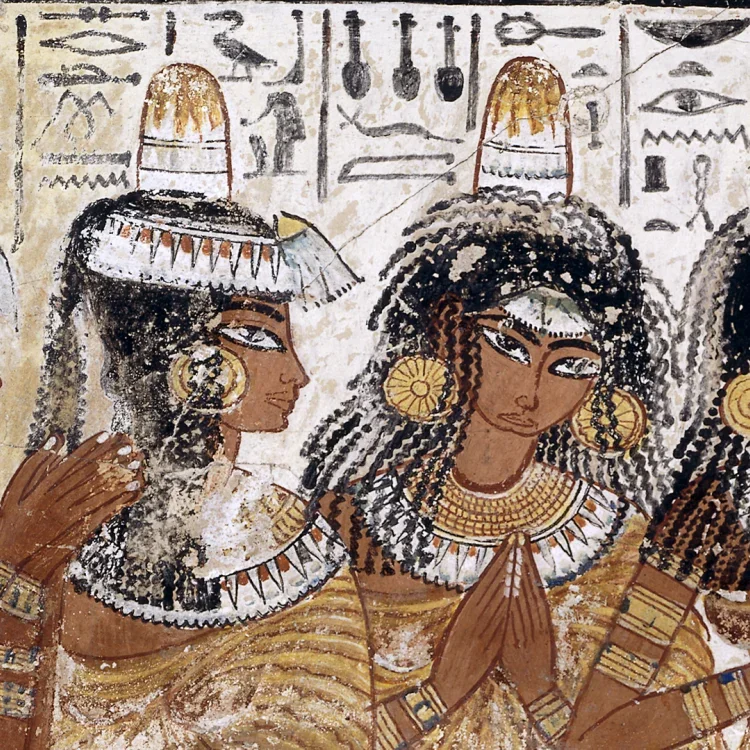
Ancient Egyptian Wigs
Image: British Museum
Renaissance and Baroque Eras
Wigs made a dramatic comeback during the Renaissance. In England, Queen Elizabeth I used them to curate her royal image. In 17th-century France, Louis XIII wore wigs to hide baldness, a practice Louis XIV elevated to a standard of aristocratic power. The 1673 creation of a wigmakers' guild marked the craft's professionalization. The Baroque era introduced the "periwig" (or peruke), popular after the 1660 restoration of Charles II. By the 18th century, wigs blossomed into ever more extravagant white powdered styles, sometimes featuring decorative ornaments like miniature birdcages.
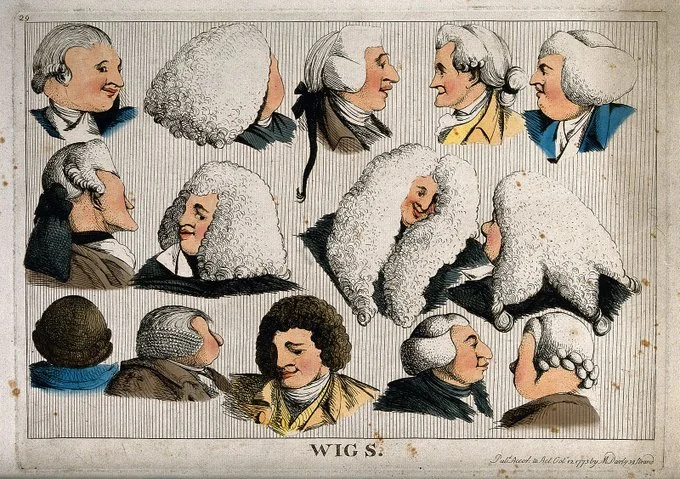
Periwigs
Image: All Things Georgian
The 19th and Early 20th Centuries
The end of the 18th century brought a shift toward naturalism. The French Revolution and the decline of the aristocracy led to a gradual rejection of the elaborate wigs that symbolized the old regime. By the 19th century, men in Western fashion had largely ceased wearing wigs daily, favoring shorter, natural hair. Yet even as mainstream fashion moved on, wigs persisted in specialized roles. In the British legal system, wigs remained a mandatory part of professional uniforms for judges and barristers. Additionally, the theater continued to rely on wigs for character portrayal. By the late 19th century, women began using "postiches"-small premade wiglets and hairpieces-to enhance the voluminous hairstyles of the 1870s without the need for a full wig.
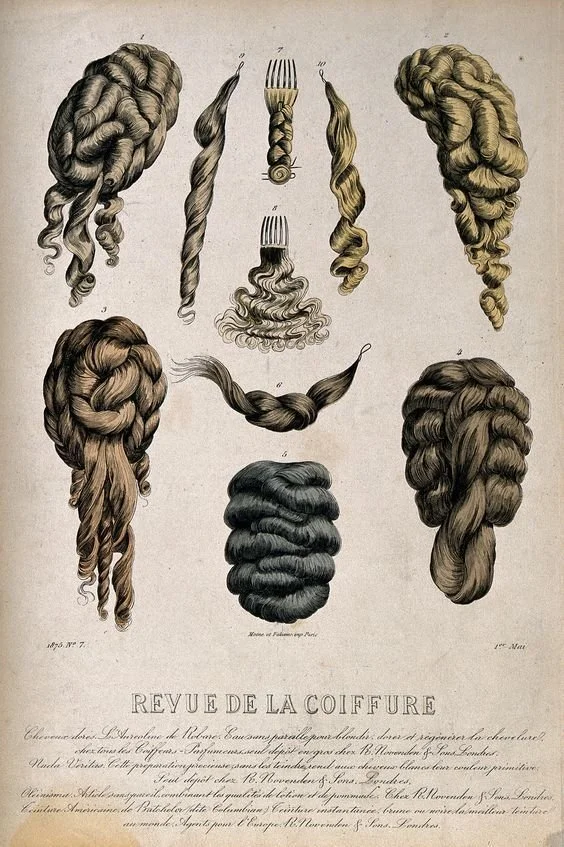
1870s Postiches
Image: Pinterest
Wigs and Black Identity
Historically, the United States has maintained a cultural preference for Eurocentric features as the standard of beauty. Being forced to conform to European standards has placed immense strain on Black hair, requiring it to look and behave in specific ways. To navigate prejudice, African Americans historically altered their physical features using presses, perms, relaxers, hot combs, and wigs.
The 1960s marked a turning point with the rise of the Black Panther Party and the broader Civil Rights Movement. Embracing natural hair, particularly afros, became a powerful act of cultural reclamation and resistance. Natural styles symbolized pride, unity, and defiance against assimilation.
Today, wigs have joined the list of protective hairstyles, such as buns, braids, and twists, that help shield hair from damage and promote healthy growth. Over time, wigs have become an integral part of Black culture-not just for protection, but also as a versatile and empowering form of self-expression.
Wigs in Modern Fashion
The 20th century saw a resurgence of wigs, fueled by the rise of film, music, and celebrity culture. In the 1920s, the "bob" hairstyle became a sensation. While it was often achieved with natural hair, it inspired a new generation of wig styles that continue to influence fashion today. The 1960s and 70s further popularized wigs as must-have, easy-to-use fashion accessories for everyday wear. Technological advancements have played a crucial role in this revival. Today’s synthetic wigs are highly sophisticated, mimicking the look and feel of natural human hair while being more affordable and easier to maintain than their natural counterparts. Thanks to this accessibility, wigs have become a staple in communities such as the LGBTQ+ and drag, where they serve as essential components of self-expression and performance art.
Wigs on the Runway
In the world of high fashion, collaborations between wigmakers and designers have produced some of the most memorable runway moments. Brands have bridged the gap between celebrity endorsement and professional design, emphasizing quality and comfort. On modern runways, influential designers frequently turn to wigs to craft avant-garde looks that would be impossible to achieve with natural hair alone. These collaborations allow fashion houses to experiment with extreme colors, textures, and silhouettes, cementing the wig’s status as a high-fashion accessory rather than a mere hair replacement.

Mugler Doll-like Hair at the SS’91 Show,
Image: Dazed

Dior AW26 Men’s Show
Image: Dazed
Contemporary Perspectives
Today, wigs are celebrated for what they are: tools for identity, empowerment, and accessibility. Beyond fashion, they remain vital for individuals experiencing hair loss due to medical conditions such as alopecia or treatments like chemotherapy. The market has grown a lot, offering diverse textures and custom colors to suit a global audience. Personalization has become a key trend, with wearers seeking wigs they can style and customize to reflect their individual personalities.
The history of wigs is one of continuous evolution. From the protective head coverings of Ancient Egypt to the mile-high powdered masterpieces of the French court and today's high-tech synthetic fibers, wigs have remained a significant part of human culture. Their enduring relevance in fashion and society stems from their ability to offer both a shield and a stage, providing comfort and privacy for some while inviting others to express their most vibrant and creative selves. As technology and fashion continue to advance, the wig’s place as a tool for empowerment and identity is more secure than ever.
References:
https://pmc.ncbi.nlm.nih.gov/articles/PMC6706986/
https://blog.nationalmuseum.ch/en/2023/02/the-power-and-pomp-of-the-wig/
https://www.instyle.com/wigs-for-black-women-history-5381125
https://www.byrdie.com/history-of-wigs-5224760
https://openlab.citytech.cuny.edu/city-tech-writer-sampler/files/2019/07/St.-Louis-2019.pdf