
Adidas Might Be The Rival to Globalization
The exhaustive Reddit threads of international shoppers devoted to the hunt for the viral Adidas Chinese New Year Tang Jacket echo the woes of my Scottish father. He groans that he can’t seem to find remotely sensible Adidas colorways in the US that he can in Europe, or secondhand. These diligent pursuits for inaccessible products made me question the reasoning behind and extent of Adidas’s location-specific product variation.

Images via Pinterest

Adidas is a massive brand active in more than 160 countries. It isn’t surprising that the tastes of billions of people might not align, and that location or culture-specific product variation would be most profitable for the brand. But recent designs might be more reliant on Adidas’ processes, employing Asian independent manufacturing partners and local-for-local sourcing, in which they purchase materials from domestic producers. Economically, this sees the development of small-scale economies that are barred from entry to markets (like sports wear) that veer towards being loosely oligopolistic (controlled mainly by big brands like Adidas, Nike, and Puma). This gives smaller local firms more opportunity but this also means that the larger firm maintains itself as the supplier's medium, and product availability is limited.


This is exemplified in the Tang Jacket, which draws inspiration from the traditional Tangzhuang, is fastened with frog-button closers, and is elongated by a Mandarin collar. Adidas has seen a boost in net sales of over 4 billion USD with their “In China, for China” strategy, which commodifies location-specific storytelling devices, tradition through fashion. This push is also possibly responsive to tariffs in the US, as predicted by Helen of Troy CFO Brian Grass in 2024: “Right now, that seems like the best strategy to diversify the supply base and reduce potential exposure to tariffs.”
Our markets are more globalized than ever before, connected by the exchanged cultures of the internet. So when a product is launched in only one country, the citizens of cyberspace are bound to fall into a craze propelled by the item’s exclusivity. We have gotten accustomed to having any clothing we want available at the click of a button, which often sooner sees a landfill than one's wardrobe. When something breaks this new-age mold, it is coveted for being unfamiliar and untouchable.
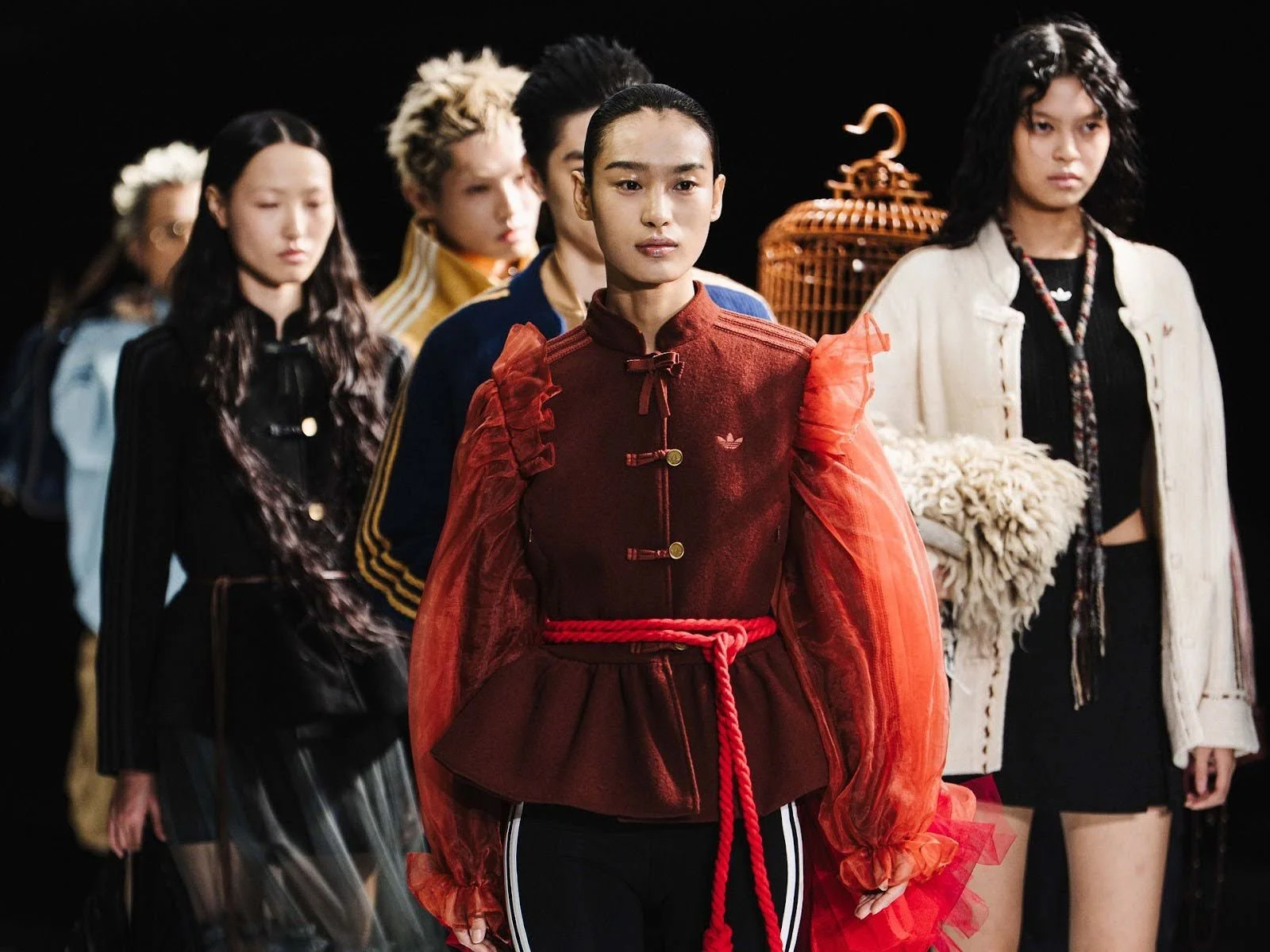
Image via Adidas
Although Adidas has released a variety of location-specific products that have not nearly erupted to the height of the Tang jacket. In September, Adidas released the BSTN München Oktoberfest Sneaker collaboration, available exclusively at BSTN Munich and online for a limited time. The first edition of the Oktoberfest shoes was released in 2017, coated with beer and puke-resistant materials. As a Tulane student, it is to my dismay that these shoes are not available for Mardi Gras. Interestingly, the second iteration, the BSTN collaboration, featured similar comedic undertones. The Italian phrases “Salute” and “Brindiamo” are embroidered into the shoe. This was to poke fun at the overabundance of Italian tourists celebrating the beer-bathed holiday. Similar to the Tang jacket, Adidas takes inspiration from traditional garb, lederhosen, for the design. Adidas fuses global tastes in these shoes, mirroring the border-traversing adoration the jacket has received.



Images via Hypebeast
Tastes are ever-changing, and it’s curious that the reception the Tang Jacket has received, when it seems impossible to predict the turbulence of trends, especially those on such a vast scale. Adidas has cultivated international attention by catering to specific cultural palates that those outside it lust after. This rift comes at a time when the whole world feels perfectly conformist, and perhaps it still is. The Tang Jacket received so much attention because unlike the Oktoberfest shoes, it’s not available to all consumers online. Adidas’s strategy relies on generalized consumer behaviors rooted in division and yearning for similitude to what they cannot have.