
Fashion is a form of power, allowing individuals to express themselves through style, color, fabric, and brand. Throughout history, fashion has reflected social norms and political expression, including the fight for women’s empowerment. Chanel has a legacy of incorporating feminism and empowerment, starting with its founder, Coco Chanel, whose designs allowed women to move freely and express themselves without the constraints of restrictive clothing.
After Karl Lagerfeld’s death, Virginie Viard was appointed as creative director for Chanel. In the notes for Chanel’s Spring-Summer 2020 collection, Viard stated that she wanted to move the brand away from Lagerfeld’s strong influence and make her own creative mark. Lagerfeld was often viewed as anti-feminist, appealing to the male gaze. This collection became an opportunity to explore how Chanel’s garments could reflect feminist ideals under Viard’s leadership.
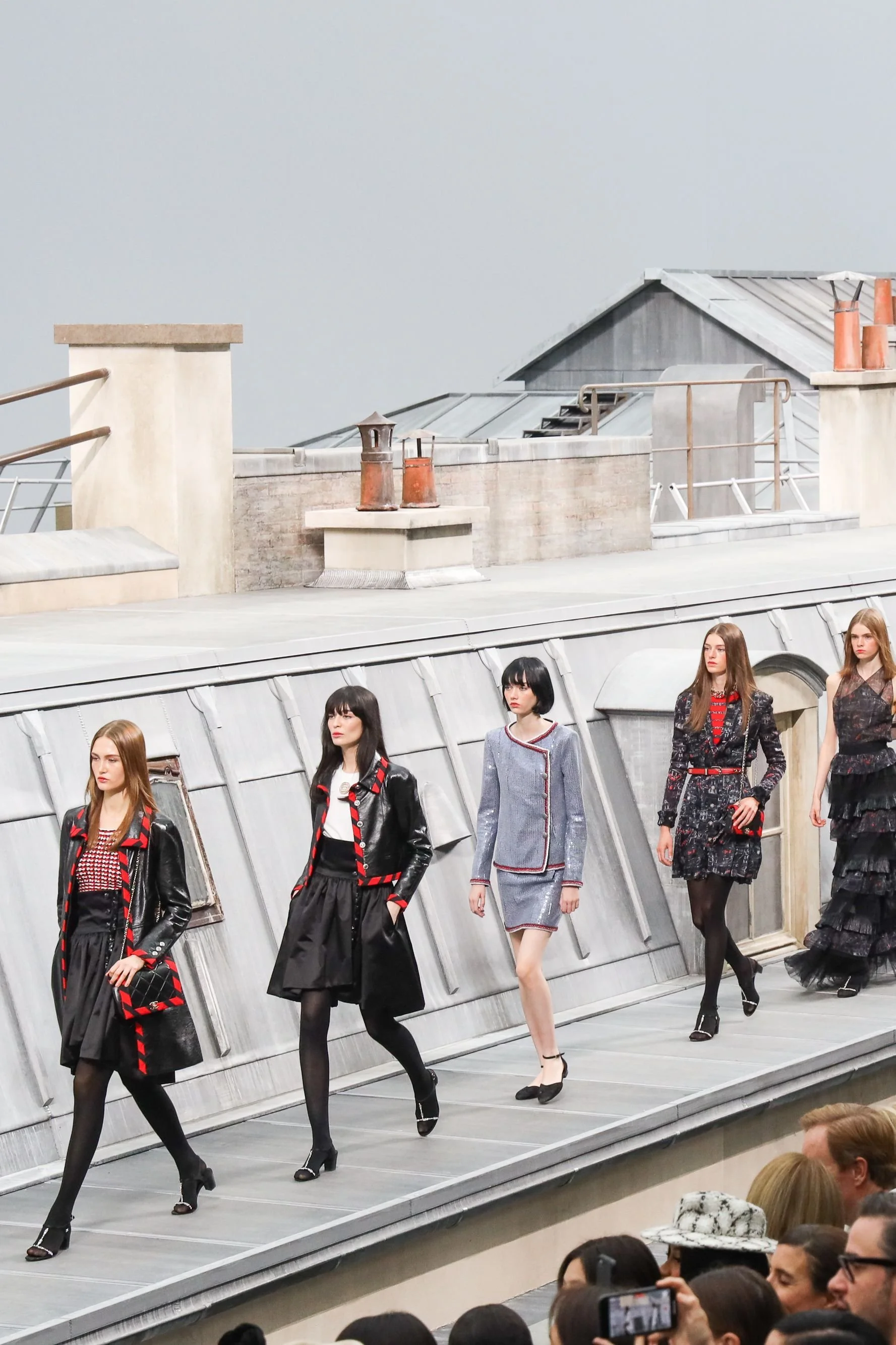
Image: Vogue France
The collection blends masculine and feminine elements, with the garments' shapes and designs merging different aesthetics. Through bold colors, structured silhouettes, and contrasting textures, the collection explores the complexities of modern womanhood: balancing power and self-expression while dealing with societal expectations.
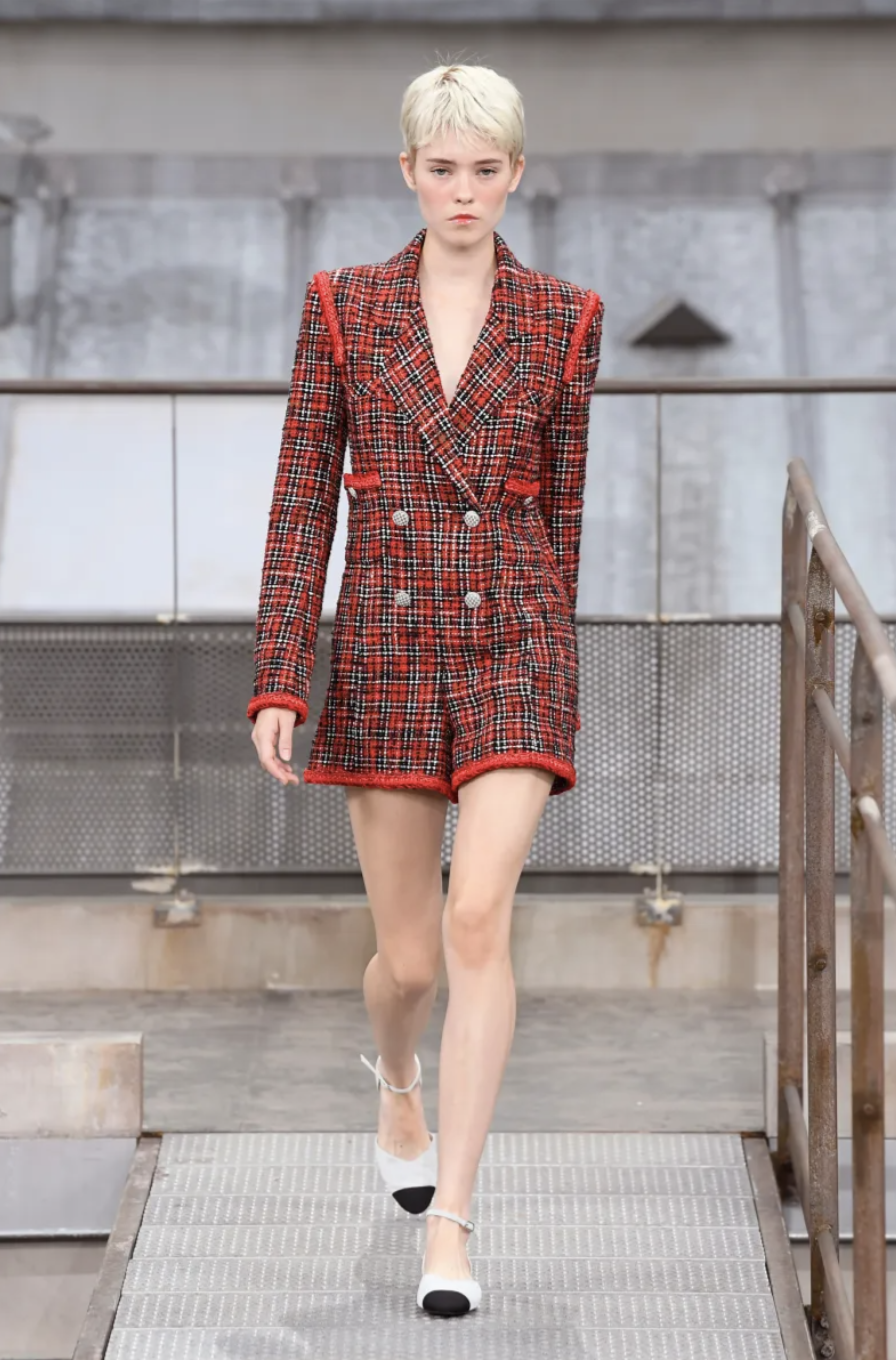
Image: WWD
One example is a red, white, and black romper that represents the Classic Chanel motif. The red, white, and black hues create contrast, with red often associated with power, confidence, and legitimacy. The blazer’s heavy tailoring and structured shoulders emphasize power, aligning with feminist ideals of women taking up traditionally male spaces. The romper’s sophistication and exposed legs add an element of playfulness, while its masculine energy changes the possibility of reinforcing traditional expectations. The flat shoes, instead of traditional high heels, also go against restrictive femininity. By utilizing flats for a runway show, the garment prioritizes practicality over an uncomfortable aesthetic. Ultimately, it serves as a feminist garment, representing business attire, success, and resilience without the need to reflect traditional gender norms for women in society.
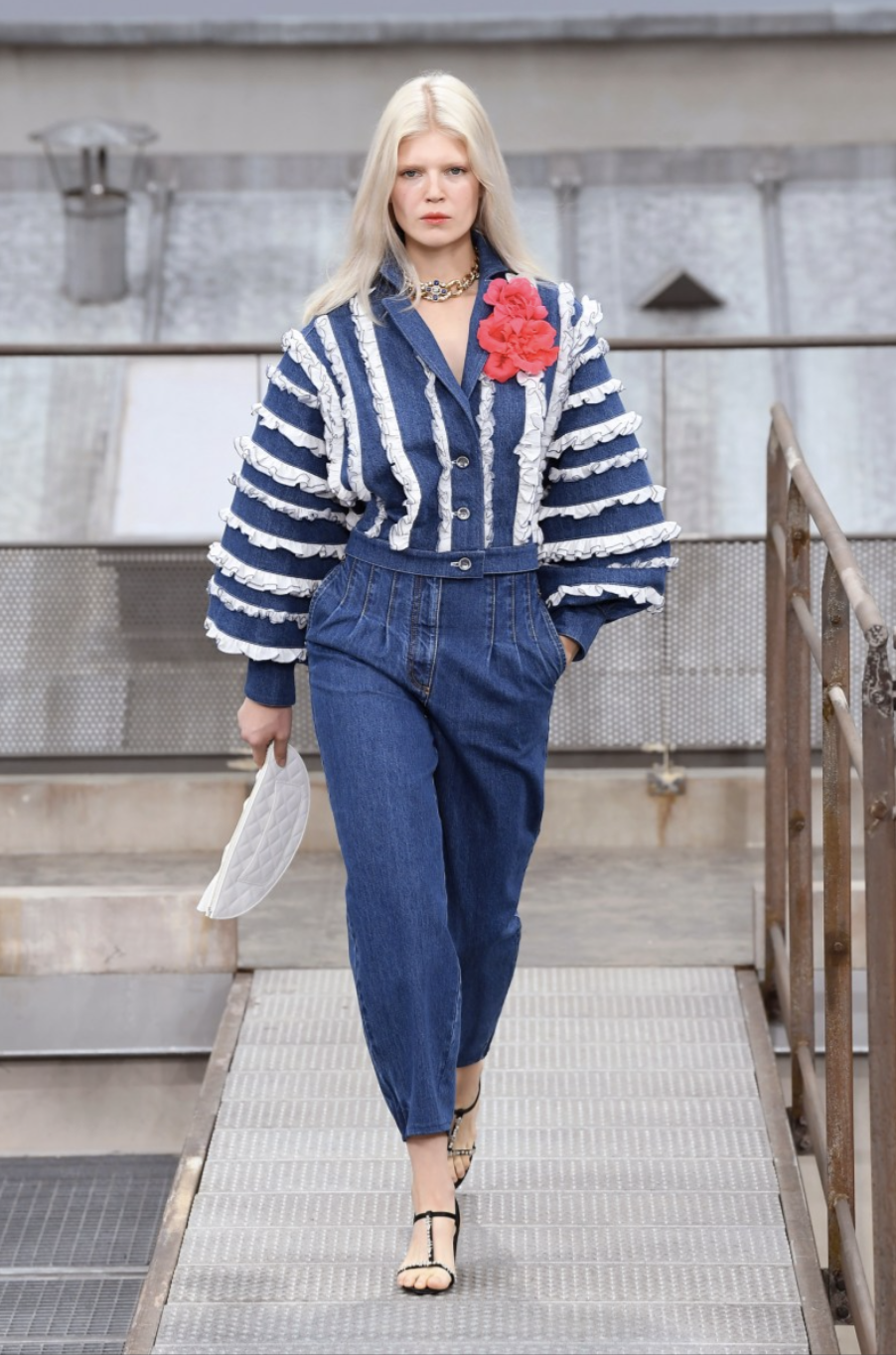
Image: WWD
Another garment, a denim jumpsuit, combines traditionally masculine and feminine elements. Blue denim is historically associated with physical labor because of its durability, while the white frills and pink floral details add delicacy and softness. Denim, a fabric often linked to laborers and male uniforms, challenges gender norms by appearing on a high-fashion runway. The look utilizes traditional male expectations, reinforcing the idea that women can have both strength and beauty. The jumpsuit itself is a version of androgyny, challenging the historical division between men’s and women’s clothing. The contrast of rough versus soft textures challenges the notion that femininity must be delicate to be beautiful. This garment reflects the complexities of modern womanhood and the desire to be individually successful while still being expected to maintain aesthetic femininity
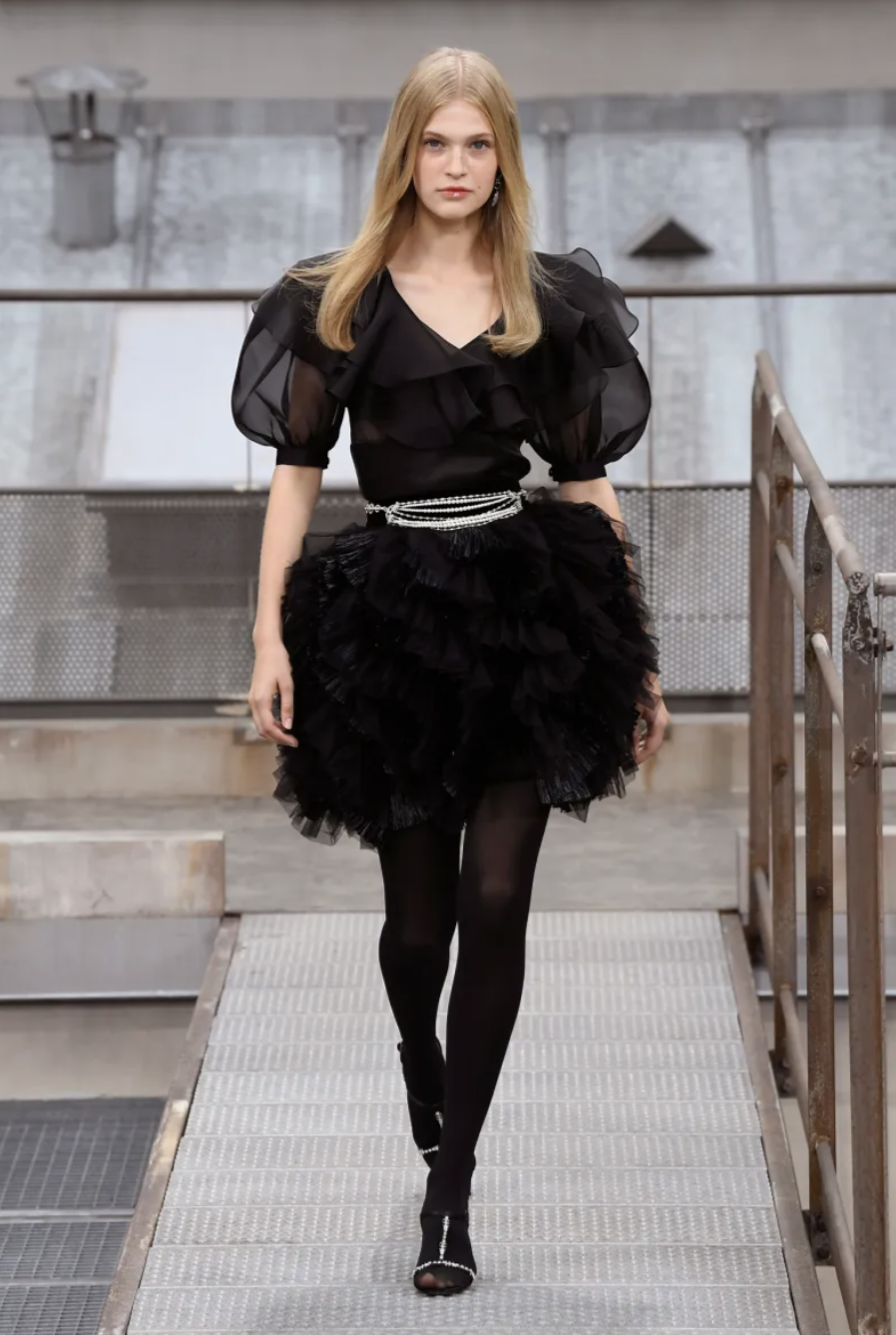
Image: WWD
However, not every garment in the collection reflects these ideals. The black ruffle dress presents a more complicated relationship with feminism. Its monochromatic choice suggests empowerment, reinforcing independence and confidence. However, the garment’s cinched waist, voluminous hips, and layers of frills create an hourglass figure that centers the male gaze. The texture, including the frilly fabric and sheer sleeves, creates a soft appearance and offers feminine delicacy. This garment presents femininity in a way that prioritizes delicate beauty over practicality, professionalism, or power. Aside from the black color, the garment overall shows more anti-feminist themes.
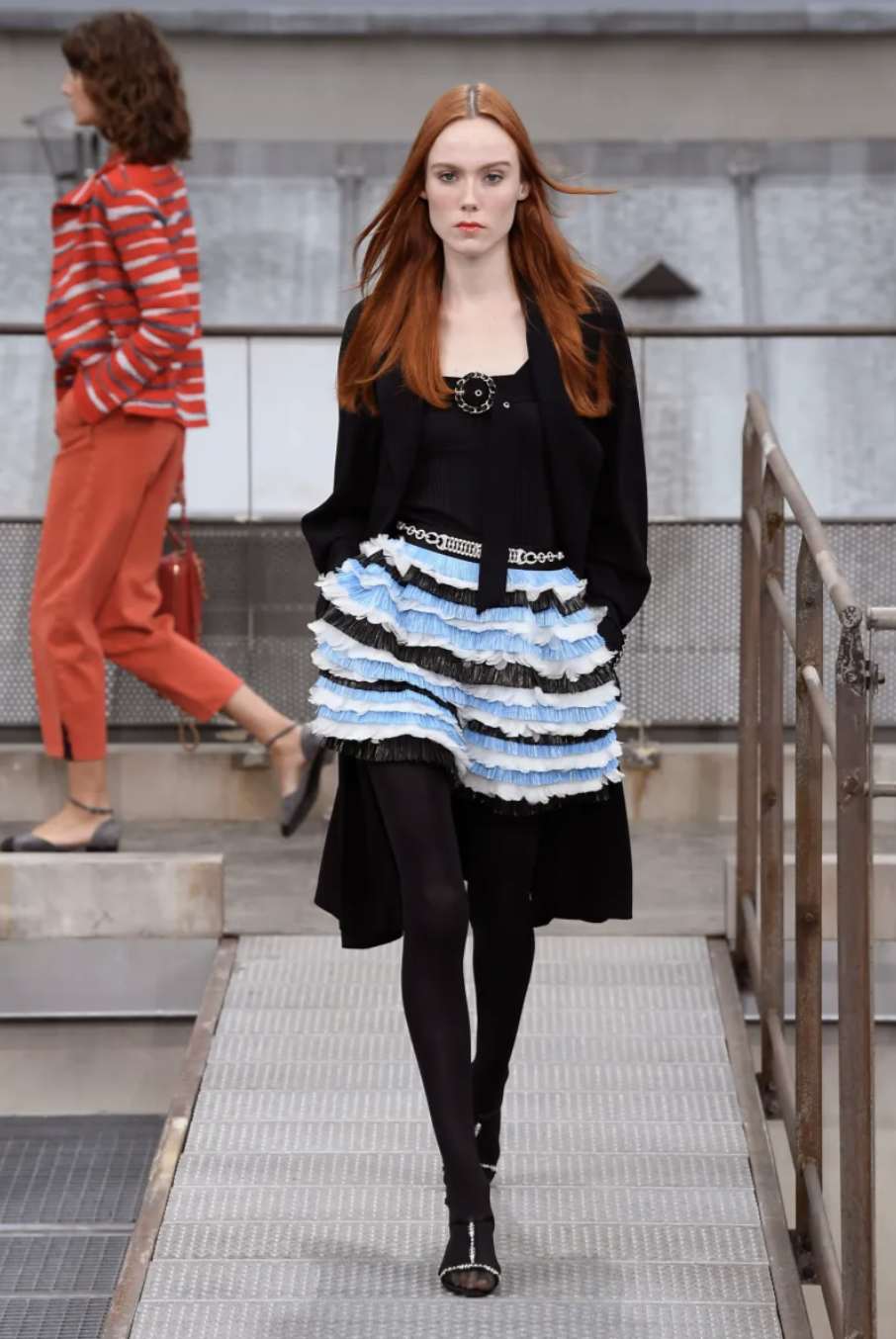
Image: WWD
The final garment combines a structured black blazer with a white, blue, and black ruffled skirt. The black creates strength and professionalism, aligning with ideas of women occupying traditionally male spaces. The blue and white frills on the skirt, however, add playfulness that contrasts with the black blazer and tights. The combination of masculine and feminine elements creates a complex reading of the garment, showing how women can express both authority and femininity.
Overall, three of the four garments analyzed support the collection’s themes of modern womanhood's complexities and the ability to balance power and self-expression while navigating societal expectations. The collection does not impose a singular definition of womanhood. Instead, it offers a diverse collection that acknowledges the complexity of modern women’s choices.
Under Viard’s leadership, Chanel’s Spring-Summer 2020 collection reflects a shift toward feminist-driven designs. By blending masculine and feminine choices, the collection presents fashion as a way for women to express themselves while challenging traditional expectations. Even when some garments reinforce traditional femininity, the collection shows the ongoing conversation between empowerment and tradition in modern fashion.
I find that the collection's most meaningful statement was not found in any single garment. It was a very diverse mixture created to represent the freedom women have with their clothing, as fashion has always had a political statement involved.
"Chanel Ready-to-Wear Spring 2020 Runway Show." WWD, 1 Oct. 2019, https://wwd.com/fashion-news/shows-reviews/gallery/chanel-rtw-spring-1203329872/chanel-rtw-spring-2020-73/.